A stained and https://seoneoapi.blob.core.windows.net/concrete-services-in-tampa-fl/concrete-contractor/all-phase-concrete-specialty-finishes-available-in-tampa-fl.html sealed concrete floor can transform a space more dramatically than most homeowners expect. I remember a coffee shop in Seminole where the owner asked for something "warm but industrial." We suggested a walnut-toned acid stain, followed by a satin sealer. The room felt wider, the coffee tasted a little richer to regulars, and the owner told me the renovation paid for itself in higher weekly sales within three months. That kind of return comes from choosing finishes that balance aesthetics, durability, and maintenance, not from chasing trends.
Tampa's humidity, seasonal storms, and heavy foot traffic require coatings that perform as well as they look. Whether you call a local crew from All Phase Concrete or search for concrete finishing contractors, the decisions you make about stains and sealers will determine how long your floors hold their character and how much upkeep they demand. Below I walk through what works in Tampa, what doesn't, and how to make choices that fit budgets, timelines, and real-life use.
Why stain and seal rather than tile or laminate
Concrete is the structural backbone of many homes, patios, and commercial spaces in the Tampa area. Leaving it bare is an option, but staining and sealing unlocks several advantages. First, you keep the thermal mass benefits of concrete. That matters in summer, when concrete helps moderate indoor temperatures without adding insulation layers. Second, properly finished concrete is low profile and long lasting. Unlike tile grout that darkens or laminate edges that lift in humidity, a sealed slab resists stains and abrasion. Third, finishes can be surprisingly affordable. For a 1,000 square foot garage or retail space, staining and sealing often runs less than half the cost of premium tile installation, depending on the product and labor.
Those advantages come with trade-offs. Decorative concrete is permanent in a way that paint is not; changing the color later requires grinding or overlay. Some stains, especially reactive acid stains, produce variegated, semi-random patterns. That look is desirable in many contexts but not when you need color uniformity. Moisture is also a critical factor. Florida slabs with poor vapor barriers or high ground water require special primers and sealers to avoid adhesion problems or blistering.
Types of stains and how they behave in Tampa
Stains fall into two broad families, each with its own behavior and maintenance needs. Reactive acid stains produce a chemical reaction with the lime content of the concrete, creating mottled, variegated colors that look like natural stone. They penetrate deep and resist peeling because they become part of the slab. Water-based stains are pigment suspensions that sit closer to the surface and provide more predictable, uniform color ranges. Epoxy and polyaspartic pigments are used in color-quartz or solid-color systems for garages and commercial floors, where impact resistance and chemical resistance are priorities.
Choosing among these depends on the desired look and the slab’s condition. Acid stain is forgiving on imperfections; the irregularities become part of the patina. Water-based stains work better when you want precise tones and repeatability across different pours. For garages or spaces exposed to oils and solvents, a two-component epoxy or polyaspartic topcoat over a pigmented base provides the most chemical resistance. Those coatings cure harder and clean easier, but they require careful moisture testing and professional application to avoid bubbling in Tampa’s humid air.
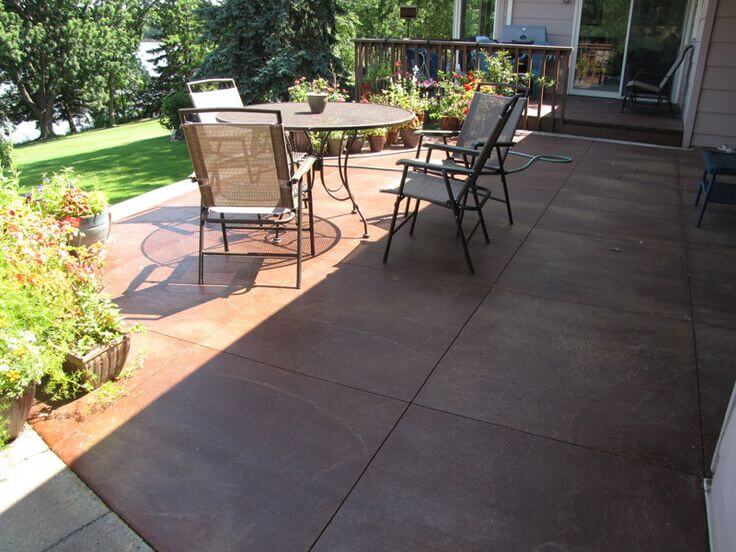
A short checklist of common finish goals and appropriate stain/seal approaches
- For natural, variegated color that hides imperfections: acid stain plus a satin solvent or water-based sealer. For consistent, designer colors: water-based stain or tinted cementitious overlay with a clear topcoat. For heavy-duty, oil-resistant floors: pigmented epoxy or polyaspartic system with a high solids finish. For outdoor patios and driveways: UV-stable water-based stains and breathable sealers to allow vapor escape. For low-maintenance residential interiors: water-based stain with a durable, scuff-resistant polyurethane or polyaspartic sealer.
Surface prep is the foundation of a successful finish
No stain or sealer will perform if the surface is not prepared correctly. In Tampa, the two most common prep nightmares are residual curing compounds left from the pour and hidden moisture issues. Curing compounds prevent stains and coatings from penetrating, so they must be removed with mechanical grinding or an aggressive chemical stripper. Grinding also exposes clean aggregate and produces the profile necessary for coatings to bond. For older slabs or slabs with coatings removed, diamond grinding followed by a thorough degrease and vacuuming is standard practice.
Moisture testing is non-negotiable. I prefer taking Calcium Chloride tests at several spots across the slab to measure vapor emission, and I complement those with a relative humidity probe inside a core when time and budget allow. If the slab exceeds recommended moisture limits for a selected sealer, the options are to install a moisture-tolerant system, apply an epoxy moisture vapor barrier, or delay until conditions improve. Cutting corners here results in peeling, delamination, and expensive rework — a pattern I have seen too often in low-bid projects.
Sealers: what they do and why the choice matters in Florida
Sealers protect the color, reduce staining, and make cleaning easier. They fall into three functional categories: penetrating sealers, film-forming sealers, and high-build coatings. Penetrating sealers soak into the concrete and repel water while maintaining a natural appearance. They are breathably stable, which is useful where moisture vapor is a concern. Film-forming sealers, such as acrylics and polyurethanes, sit on the surface and provide color enhancement and sheen. High-build coatings, like epoxy or polyaspartic, create a thicker protective layer and dramatically increase abrasion and chemical resistance.
In Tampa, film-forming sealers can show signs of wear faster on exterior surfaces exposed to UV and frequent wet-dry cycles. Acrylics can fade and craze under strong sun. Water-based polyurethanes offer a good middle ground: they resist ambering, provide abrasion resistance, and are easier to recoat. For commercial kitchens, garages, and retail spaces, I usually recommend polyaspartic or high solids polyurethane because they cure quickly and tolerate traffic sooner. The downside is cost and the need for skilled installers to avoid roller marks or trapped solvents.
Design decisions: color, sheen, and pattern without overdoing it
Decorative concrete can be subtle or loud. The best designs often respond to the space rather than dominate it. For a living room, a warm walnut acid stain with a satin topcoat provides depth without competing with furniture. In an outdoor dining area, earth tones and slightly rough textures prevent slip hazards and read as natural extensions of the landscape. For retail floors, a medium sheen with tight color control helps product display and hides scuffs.
Patterns and scoring add visual interest and control cracking. Saw-cut control joints can be used as design lines, and we often fill them with colored sealants that match the floor tone. Stenciling and integral pigments allow logos and graphics, but remember that high-traffic areas will fade printed detail over time unless protected by a thicker wear layer. When clients ask for "marble look" effects, I caution them about expectations; stained concrete suggests marble, it does not replicate the light-reflective translucency of stone.
Maintenance realities, with numbers that matter
A properly installed stained and sealed floor is low maintenance, but it is not maintenance-free. Expect to clean with pH-neutral cleaners and avoid abrasive pads that can dull the sealer. For residential interiors, resealing schedules vary: penetrating sealers may be good for three to five years, whereas film-forming polyurethanes might need maintenance recoats every five to seven years, depending on traffic. High-use commercial spaces often require recoat intervals of one to three years for appearance maintenance. These are practical ranges; actual life depends on traffic, cleaners used, and environmental exposure.
A simple cost snapshot helps set expectations. For an average Tampa driveway or patio, acid staining and sealing might run between $4 and $8 per square foot for materials and labor. Water-based stains and higher-end sealers push that toward $6 to $12 per square foot. Epoxy or polyaspartic systems for garages or commercial floors typically start around $6 and can go to $12 or more per square foot, depending on prep and thickness. These numbers are not quotes; they are ballpark figures to plan budgets and to separate low-budget surface refreshes from investments meant to last a decade or more.
Common problems and how experienced crews avoid them
The top failures I see come from inadequate prep, ignoring moisture risks, and mismatched products. For example, sealing a slab with residual curing compound leads to flaking in months. Applying a solvent-based sealer over a slab with active vapor drives results in bubbles and delamination. Using an indoor-grade sealer outdoors invites UV degradation. Concrete finishing contractors who specialize in decorative systems know how to sequence operations: test for contaminants, measure moisture, grind to the proper profile, etch or neutralize as needed, stain with adequate dwell time, and apply a chosen sealer under the right temperature and humidity window. In Tampa, that often means scheduling work in late morning to avoid heavy dew and watching forecasted storms for at least 24 hours before and after application.
Choosing the right contractor: questions to ask
Not all crews perform decorative work the same. Look for contractors who can show recent, local projects. Ask how they test for moisture and what products they prefer in Florida conditions. Request a written warranty and clarify whether it covers labor and materials. Insist on seeing before-and-after documentation of the exact slab type, and ask for references you can call. A good crew will also walk you through maintenance needs and suggest a reasonable recoating schedule based on your use case.
If you want to vet quickly, ask these three pointed questions: How do you remove curing compounds? What moisture testing method do you use? Which sealer do you recommend for my climate and why. Their answers will reveal whether they rely on quick fixes or on methods that last.
When decorative concrete is not the right choice
There are situations where stain and seal is the wrong approach. If you require precise color matching to a swatch under variable light, terrazzo or tile may give better control. If the slab is crumbling, heaving, or undermined by subgrade issues, repairs or a new pour are the right call. And when the owner expects the finished floor to hide repeated oil spills with no maintenance, a sacrificial vinyl or epoxy flooring system might be more practical.
Working with All Phase Concrete and local crews
Companies like All Phase Concrete, and a handful of skilled concrete finishing contractors around Tampa, bring value through experience with local weather, building codes, and typical substrate conditions. They can advise on the best stain type for a pool deck that sees salt spray, or select a polyaspartic formulation that cures in a single day for commercial tenants with tight turnaround requirements. The local knowledge matters as much as product choice.
A practical, final note on planning and timing
Budget for a short discovery phase: surface evaluation, moisture testing, and a small sample area or mock-up. Expect a minimally disruptive turnaround for an average 1,000 square foot interior: two to four days for prep and staining, plus a day for topcoats if moisture and temperature align. Exterior work can require extra days to ensure no rain threatens the sealer during cure. Plan for the maintenance cadence and include a reseal line item in your five-year budget. Done right, decorative stained and sealed concrete offers a balance of beauty, durability, and economy that performs well in Tampa’s climate.
If you would like, I can walk through costs and timelines for a specific area of your property, suggest sample palettes suited to Tampa light and landscaping, or outline a moisture testing checklist you can use before booking a contractor.